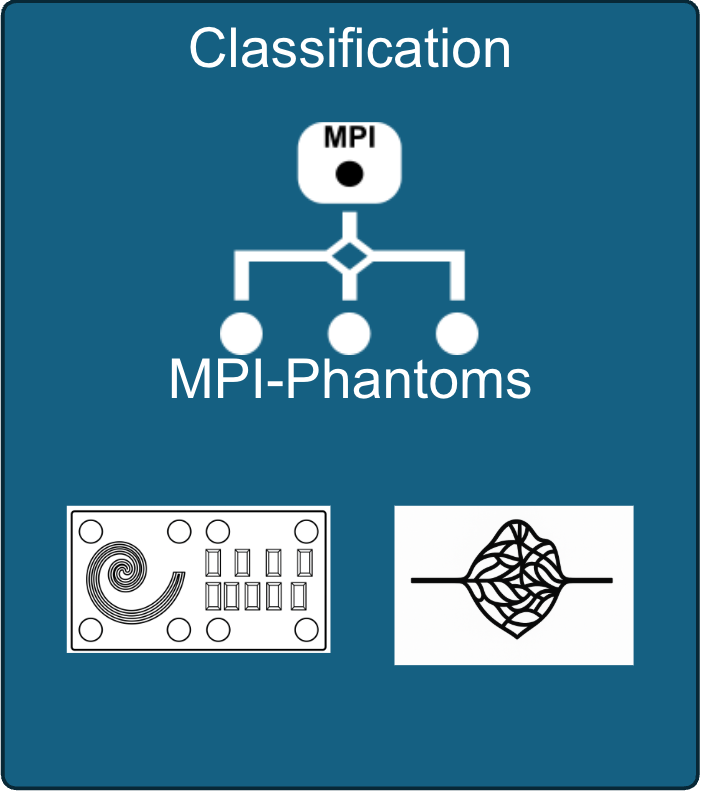
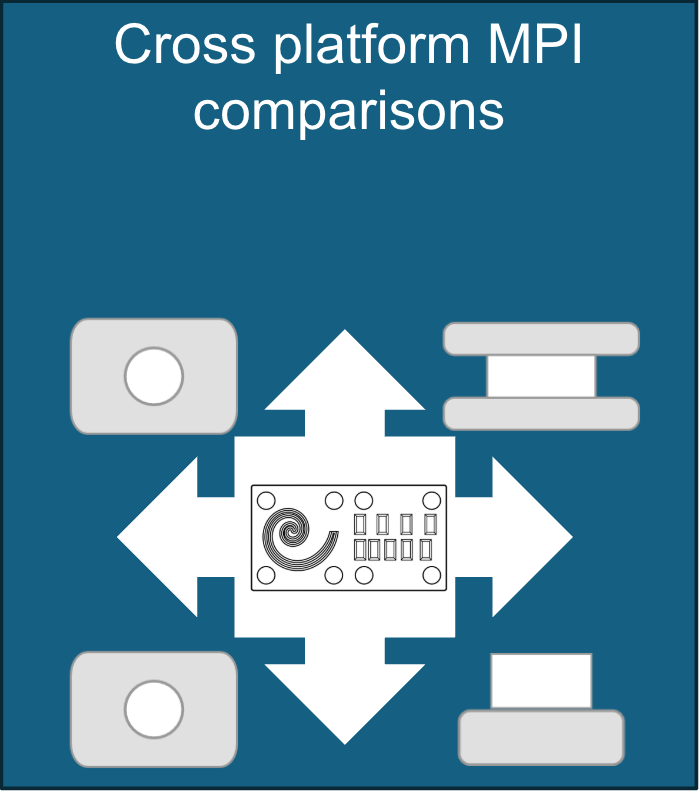
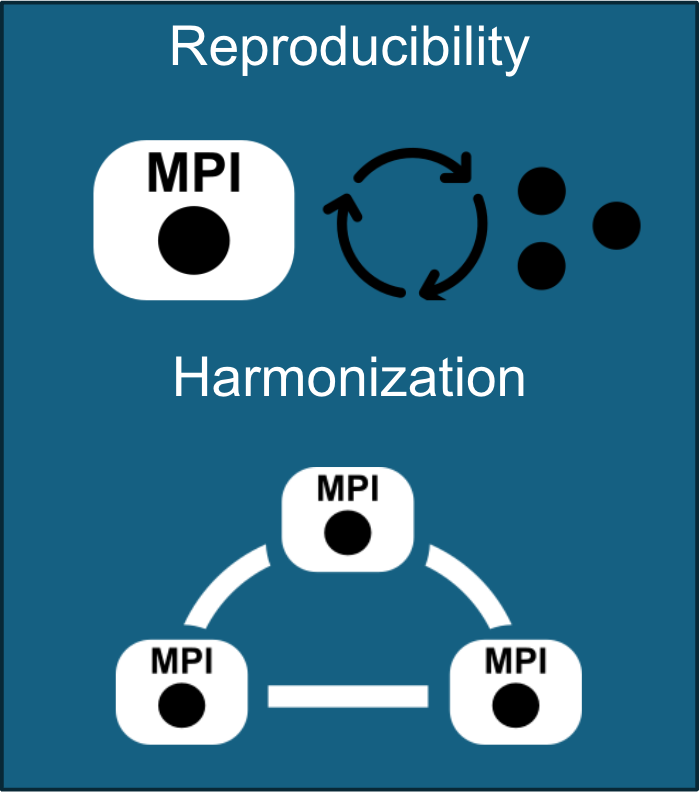
Working Group 1 (WG 1) is dedicated to assessing the performance of various MPI scanners by developing standardized evaluation criteria and procedures. A key initiative of WG 1 is the creation of an open-source database of MPI and MPS (Magnetic Particle Spectroscopy) systems, including components and control software. This resource will support the reproducibility and optimization of future MPI and MPS technologies, fostering innovation and collaboration within the research community.
Goal 1:
Performance assessment of MPI
scanners
Goal 2:
Open-source specification
database for MPI/MPS
Goal 3: Improve future MPI and MPS technologies
WG 1 structure & How to join
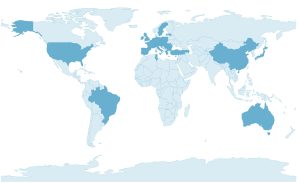
This working group is led by Prof. Volker Behr and Dr. Frank Wiekhorst and includes > 50 researchers from 34 countries.Click here to see the participant list & How to Join.
Geographical distribution of WG1 participants in the NexMPI COST Action.
WG1 leader
Prof. Volker Behr is head of the Workgroup for Experimental Magnetic Particle Imaging at the Chair of Experimental Physics 5 at the Julius-Maximilians-Universität Würzburg, Germany, which he established in 2008. Based on the experience acquired during his PhD work on hardware development for Magnetic Resonance Imaging the initial focus was on hardware development including the world’s first operational MPI-MRI- and MPI-CT-hybrid systems. The concepts of Traveling Wave Magnetic Particle Imaging (TWMPI) as well as Critical Offset Magnetic PArticle SpectoScopy (COMPASS) were developed and are actively pursued in his group. By now research topics include software development, reconstruction and biomedical application of MPI. In close collaboration with the University Hospital of Würzburg in December 2025 he received funding by the German Research Foundation (DFG) for establishing the
WG1 co-leader
Dr. Frank Wiekhorst is a physicist and head of the Metrology for Magnetic Nanoparticles Group at Physikalisch-Technische Bundesanstalt, the national metrology institute of Germany. He is specialized in characterization, quantification, imaging and standardization of magnetic nanoparticles for biomedical applications with special focus on exploiting MPI and MPS technologies. Since 2015 he is supporting the MPI research at one of the first preclinical MPI scanners in Germany at Charité University Hospital. To this end, much of his current research is centered around magnetic nanoparticles interacting with their biological environment when used as MPI tracers and for hyperthermia therapies.